Our mission is to raise awareness and encourage reporting of escaped occurrences of Callery pear (Pyrus calleryana), an invasive tree prevalent across the eastern U.S. and continuing to spread. A key goal of this project is to fill in the gaps where no escaped populations of Callery pear have been reported to major mapping platforms. Reporting escaped occurrences of Callery pear will ensure that the known distribution of this invasive tree is as accurate as possible.

Invasive Pear Watch tracks escaped occurrences of Callery pear.

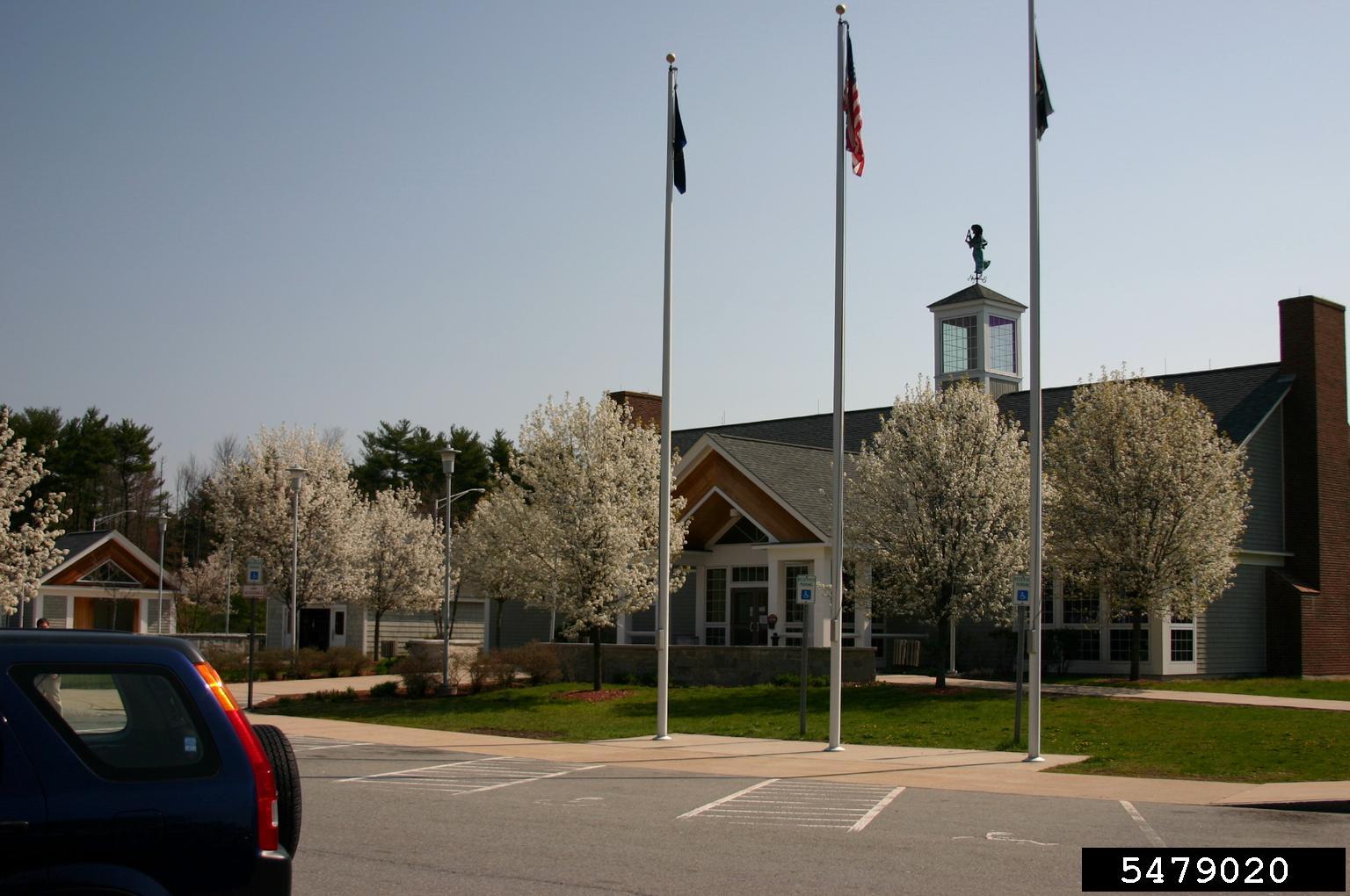
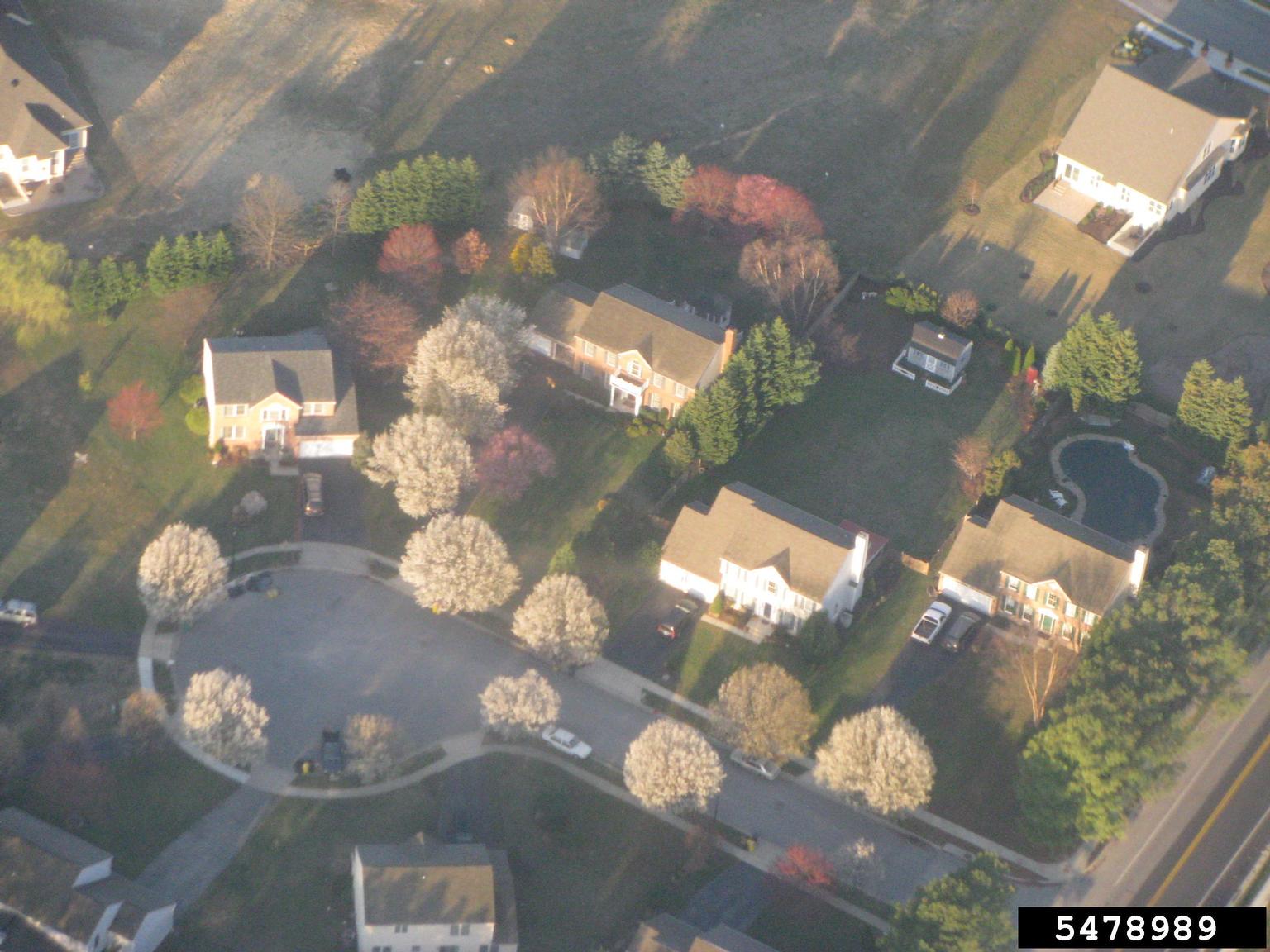
Escaped population (left) – James H. Miller, USDA Forest Service, Bugwood.org.
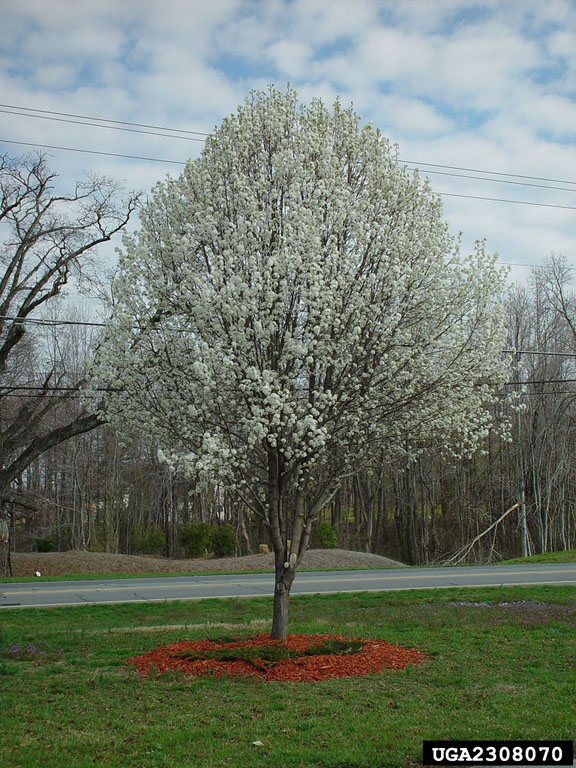
Planted landscape use (right) – Leslie J. Mehrhoff, University of Connecticut, Bugwood.org.
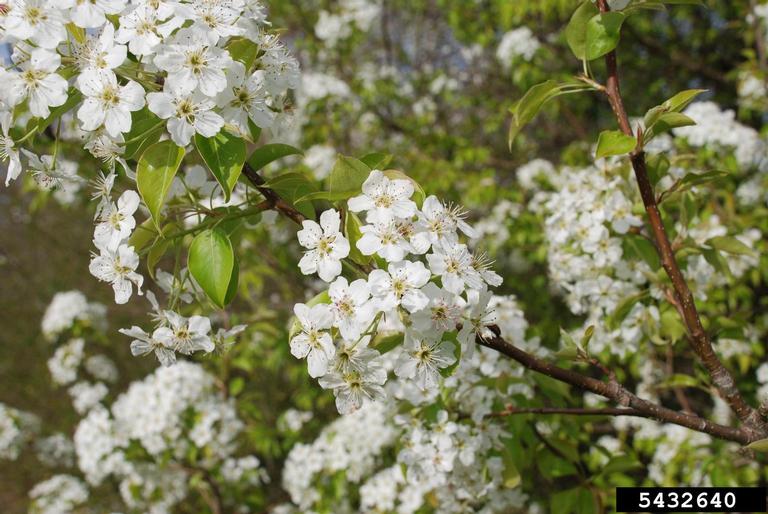
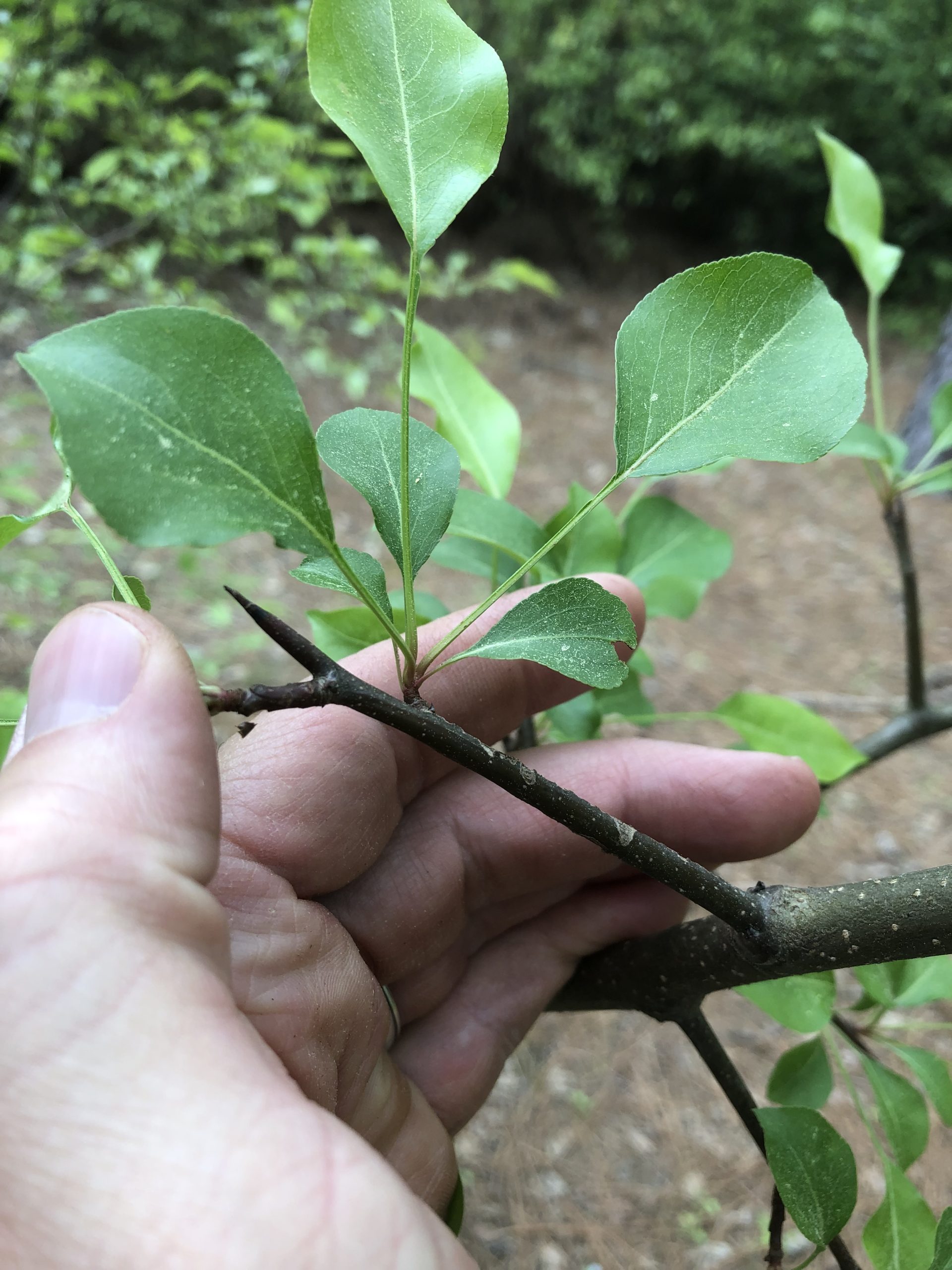
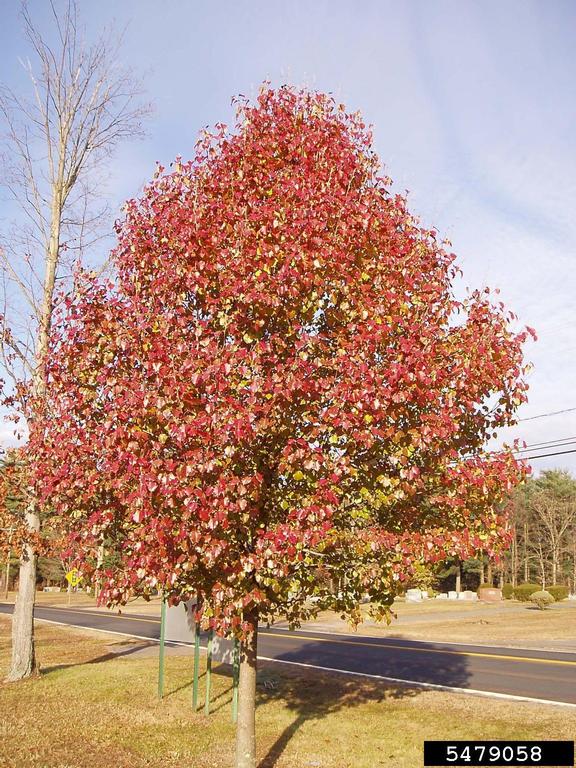
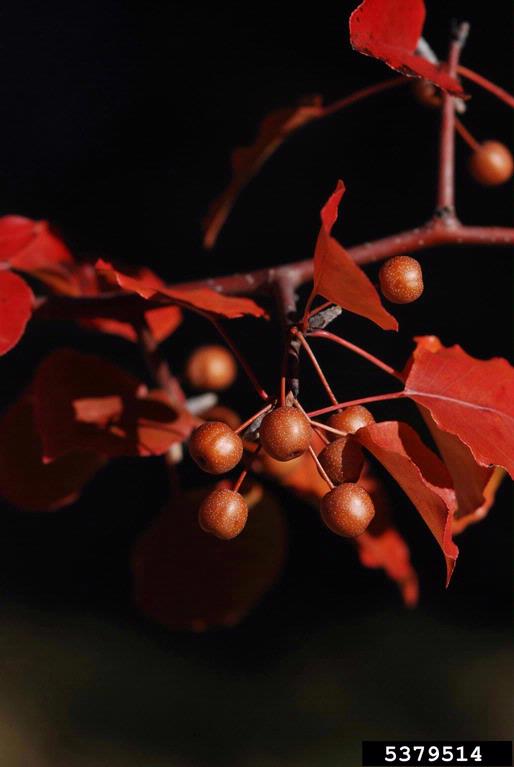
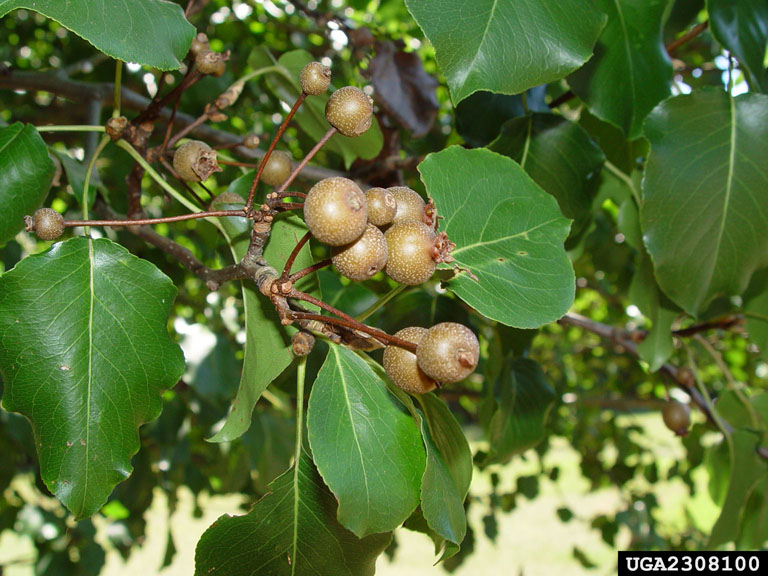
The Callery pear (Pyrus calleryana) is a deciduous tree that can grow up to 60 feet tall with a 2-foot-wide trunk. It has shiny, wavy-edged leaves and produces showy but foul-smelling white flowers in early spring before its leaves emerge. Its small, round fruits are green to brown and about half an inch in diameter.
Callery pear blooms from very late winter to early spring. In autumn, the foliage is brilliant red. The fruit is persistent through winter and after the leaves fall.
They have been widely planted throughout the United States since the early 1960s as ornamental. New cultivars of Pyrus calleryana were bred to reduce the tree’s tendency to split in snow or high winds. The Bradford pear cultivar, other P. calleryana cultivars, and P. betulifolia, or Asian pear, can hybridize and produce fertile fruit. In addition to this, fertile pear varieties are commonly used as rootstock when grafting. If the grafted crown is damaged, the fertile rootstock can dominate, producing fertile fruit. These factors and others may have contributed to the trees seeding into natural areas and becoming an invasive problem.
Birds eat the fruit and can spread far beyond where they were initially planted. These invasive trees take up habitat previously populated by native hardwood trees, shrubs, and other plants. Those native plants supported a wide variety of native insects and animals that may be unable to live on Callery pears.
EDDMapS. 2025. Early Detection & Distribution Mapping System. The University of Georgia - Center for Invasive Species and Ecosystem Health. Available online at http://www.eddmaps.org/; last accessed .
Fruit are eaten by birds and other animals and spread far and wide wherever they travel.
They are highly susceptible to branches breaking off in high wind and rain and ice storms, which can lead to disease that will kill the tree.
Bradford pear has been available since about the 1960s for use as a landscaping tree.
The Callery pear flowers are notorious for their particularly odious flowers which have been likened to rotting fish and other unpleasant scents. The flowers are pollinated by insects, possibly more often by flies as opposed to bees.
The fruit on Callery pears are small, brown, woody, and round. They persist on the tree and soften after a winter freeze, allowing them to be eaten by birds.
There are likely two big reasons for the delay in aggresive spread beyond where it was planted. The first is that this species requires cross pollination with different plants. The ‘Bradford’ variety was effectively one tree and so couldn’t produce fruit with only other ‘Bradford’ trees. Once other varieties were planted, fertile fruit started being produced. The other main reason is that woody plants often take longer than herbs/forbs and grasses to reach a critical population mass to start spreading beyond where it has been planted and be noticed by the people in a community.
Find the Gaps. Fill the Map. Invasive Pear Watch.


Powered by EDDMapS.
Website developed by the University of Georgia Center for Invasive Species and Ecosystem Health and Clemson Cooperative Extension Service College of Agriculture, Forestry and Life Sciences as a part of a collaborative effort to find and map gaps in Callery pear occurrence.
Questions and/or comments to the Bugwood Webmaster.
Last updated March 2025 / Privacy.